


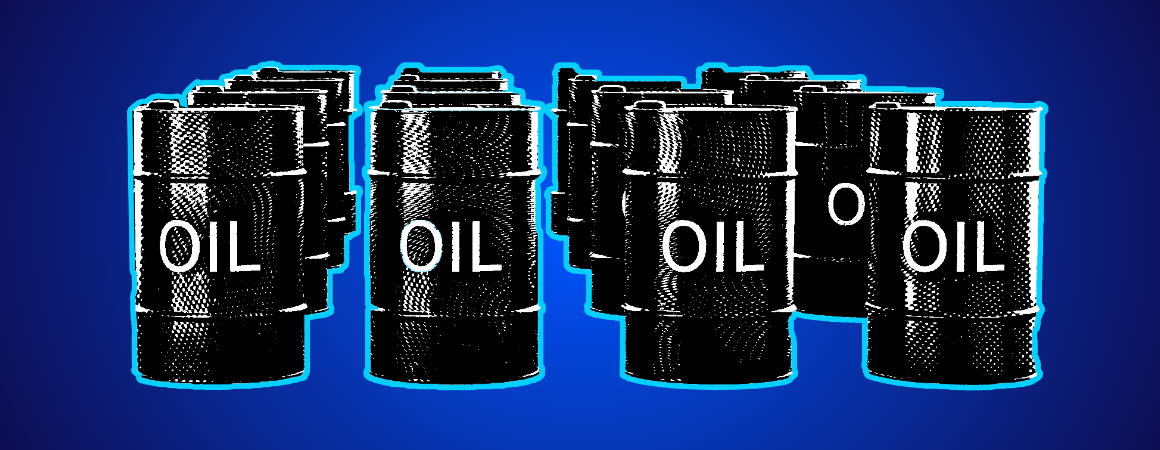
How to Trade Oil During a Crisis in the Middle East
April 7, 2026 at 12:36 PM
Trading oil when tensions explode between the US and Israel on one side, and Iran on the other is like strapping into a roller coaster as of the spring of 2026. But in line with thematic investing trends – this is one of the major themes for 2026 and working out how to behave in these tough market conditions is essential to oil traders. While one doesn’t need a PhD in global supply chains to trade these events successfully, one certainly needs to understand how the market reacts to panic and euphoria.
The Golden Rule: "Fear" vs. "Fact"
Retail traders usually lose money during a crisis because they suffer from FOMO (Fear Of Missing Out) and get trapped after buying at the very top of a massive trend move. To trade like a pro, you must understand the Geopolitical Risk Premium. Think of it as a "fear tax" – when tensions in the Middle East rise the oil market rallies, and risk assets, such as stocks and currencies of oil importers decline.
When an alert flashes across your screen, ask yourself one simple question: "Did an actual oil facility get destroyed, or are politicians just making threats?"
- The Fear Fake-Out (Words): A politician issues a threat, or a minor skirmish happens that doesn't hit oil infrastructure. Algorithms instantly buy the headline, and oil shoots up $2 in five minutes. This is a dangerous precursor to emotional trading. Because no actual oil was removed from the market, this price spike may collapse within 24 to 48 hours.
- The Fact Trend (Damage): A headline confirms that a major oil refinery is burning, or ships are actively blocked in the Strait of Hormuz. Real supply is now missing from the world. In this case, the price spikes and stays high, creating a strong, sometimes multi-day uptrend.
Know Your Symbols (UKOIL vs. USOIL)
When you open your broker platform, you will usually see two main oil markets. Knowing which one to click is crucial:
- UKOIL (Brent Crude): This is the global benchmark for oil transported by sea. It is highly sensitive to the Middle East drama.
- USOIL (WTI Crude): This is American oil. While it will follow UKOIL up and down, it is slightly more insulated because it is landlocked inside the US and most of it is for internal consumption.
Oil Trading Strategies
During these conflicts, you can temporarily throw complex technical analysis out the window, as the news headlines are flying in faster than one can usually react. Following are three example trading methods that are tried and tested in volatile markets.
Strategy 1: "Fading the Fake-Out”
Suitable when a scary headline hits, but no actual oil infrastructure is destroyed.
- The Setup: A news alert causes a massive, rapid spike or a slump. Switch to a larger time frame chart. Do not act on emotions. Let the trading algos fight it out and pick your time to enter the market carefully.
- The Trigger: Indicators, such as the RSI (Relative Strength Index) may help in such conditions. Once it goes to an extreme above 75 or 80 (extreme overbought), or below 20 or 25 (extreme oversold) on the downside, look for a reversal candlestick pattern at the top of the spike, like a "Shooting Star" (a candle with a small body and a long upper wick).
- The Trade: Pick a price level, and a direction and enter into a position. You are betting the "fear tax" was an overreaction and the price will slowly bleed back down to its pre-headline level (or that a good headline is rather benign and an initial slump lower will be pushed back to the upside). Place your Stop-Loss carefully and don’t over-react when losses happen. Revenge trading is a real problem for traders.
Strategy 2: The Breakout & Retest
Use this when there is a confirmed, physical attack on oil infrastructure or a confirmed de-escalation.
- The Setup: The news is truly bad or good, and oil prices blast heavily through a major upper resistance or a downside support line on your chart.
- The Trigger: Never chase the giant green or red candle. Wait for larger time-frames to close. The price may well pull back slightly or even materially to "retest" the range it just broke out of as old resistance levels become support.
- The Trade: Use entry orders to position for a rebound bounce or a re-test slump. Because headlines change by the minute in a hot war, the use of a Trailing Stop-Loss may be suitable. As the price moves, your stop-loss moves up or down with it, locking in your profits automatically.
Trading Survival Rules (Risk Management)
Because trading CFDs involves risk, poor risk management during a war may cause significant volatility in the equity of your account. In order to protect yourself from losses :
1. Be mindful of execution risks. Beware of slippage - right as a major breaking news alert hits, price gaps are a frequent occurrence as algorithmic orders disappear from the market and open the way for wide price swings. To protect yourself from slippage, avoid using market orders, and switch to limits and stops, but also beware that those aren’t guaranteed to be executed at the prices you’ve set out. Note, that if you click on a 'Buy' or 'Sell' button, the exact second a headline hits, you risk of getting execution at a different price to which you clicked is not to be ignored. Disciplined traders wait 3 to 5 minutes after a headline drops to let the markets quiet down and digest the news before choosing a direction.
2. Reduce your position’s size - during a volatile crisis, when headlines are coming one after the other a $1-2 swing in a minute is normal. In light of the volatility wider time-frames and tight stop-losses, you will get "wicked out" (stopped out by market noise right before the trade goes your way). Cut your normal position size (lot size) in half, and be mindful of the distance of your limit and stop orders from the market price. Your dollar-risk should be closely related to your account balance, and your trade needs to have enough room to breathe.
3. Never Hold Over the Weekend Geopolitical escalations almost always happen on Saturdays and Sundays when markets are closed. If you leave a leveraged trade open on Friday evening, the market might "gap" (jump) significantly higher or lower when it opens on Monday. Your stop-loss will not protect you from a weekend gap, so the rule of thumb is to close all directional oil trades before the end of the last trading day of the week.
Summary Checklist
- Did the news destroy actual oil?
- Be mindful of UKOIL vs USOIL.
- Wait some time after a headline for the market to normalise.
- Cut your lot size in half and widen your stops.
- Close your trades before the weekend.
This material is a marketing communication provided for informational purposes only and does not constitute investment advice, recommendation, or an offer or solicitation to trade. Any market analysis, opinions, or forecasts are based on publicly available information and do not constitute independent investment research. Past performance and forecasts are not reliable indicators of future results. Scope Markets accepts no liability for any loss arising from reliance on this information.
Related Articles

The Trillion-Dollar Watt: Trading the AI Supercycle’s Power Boom
By Victor Golovtchenko
The primary bottleneck to the artificial intelligence revolution is no longer advanced silicon or software engineering; it is electricity. As of April...
Read More
Thematic Investing
Artificial Intelligence
AI Hyperscalers
Coal
Energy
Stocks

A Beginner’s Guide to Investing in Physical Gold vs. Gold Stocks
By Victor Golovtchenko
As you embark on your journey into trading and investing and begin building a portfolio from scratch, you will inevitably encounter one of the oldest ...
Read More
Thematic Investing
Gold
stocks
ETFs
Gold stocks
Physical gold
Trump 2.0: a blip in history or a structural geopolitical shift?
By Victor Golovtchenko
Trump 2.0: a blip in history or a structural geopolitical shift?
Read More
Thematic Investing
Geopolitics
Trump
Forex
Commodities
us dollar